Sustainable heating & cooling

Heat pumps are versatile devices that can both heat and cool your home by transferring heat energy between indoor and outdoor environments. Using a refrigeration cycle, they extract heat from the air, ground, or water and transfer it to where it’s needed. There are several types of heat pumps, including air-source, ground-source, and water-source models, each with unique features and applications suited to different climates and building types.

The efficiency of heat pumps is typically measured by their Coefficient of Performance (COP) for heating. A higher COP indicates better performance, meaning the system uses less electricity to provide the desired heating or cooling output, improving sustainability. Heat pumps are an environmentally friendly option, as they significantly reduce carbon emissions compared to traditional fossil fuel-based systems and help combat climate change. They can also integrate with renewable energy sources like solar panels to further enhance sustainability and improve energy efficiency. Additionally, heat pumps offer long-term savings by lowering energy bills, reducing reliance on fossil fuels, and providing consistent indoor comfort throughout the year in all seasons.
Save £7,500 with a heat pump grant

With the Low Carbon technologies that Green Systems Engineering are involved with, you will be able to take advantage of the Boiler Upgrade Scheme (BUS) which is a government initiative in England and Wales aimed at supporting the transition to low-carbon heating systems.

Through this scheme, property owners can receive grants to help cover the cost of installing heat pumps or biomass boilers.

Grants Available
  • £7,500 for air source heat pumps.
  • £7,500 for ground or water source heat pumps.
Eligibility
  • The scheme is open to property owners in England and Wales.
  • Installations must be carried out by certified installers under the Microgeneration Certification Scheme (MCS).

What type of heat pump installation is right for you?

Heat pumps offer a versatile and energy-efficient way to heat and cool your property. With various types available, you can find a solution that perfectly matches your needs and helps reduce your carbon footprint and energy bills. Discover the different heat pump installation options we provide and learn how they can transform your home or business comfort.

Air-Source Heat Pumps (ASHP)

Air-source heat pumps are the most common type and function by transferring heat between the air inside and outside your home. They perform efficiently across different climates, making them a widely used option for residential and commercial properties. There are two primary subtypes: air-to-air heat pumps, which regulate indoor temperatures by exchanging heat with the outside air to maintain comfort throughout the year, and air-to-water heat pumps, which transfer heat to water for use in systems such as radiators or underfloor heating, providing consistent warmth while also supplying hot water for household needs.

The effectiveness of air-source heat pumps is measured by their Coefficient of Performance (COP), which indicates how much heat is produced for each unit of electricity consumed. COP typically ranges from 2.5 to 4.0, meaning the system generates 2.5 to 4 times the energy it uses, leading to greater efficiency. Proper installation and maintenance further enhance performance, ensuring long-term cost savings and environmental benefits.

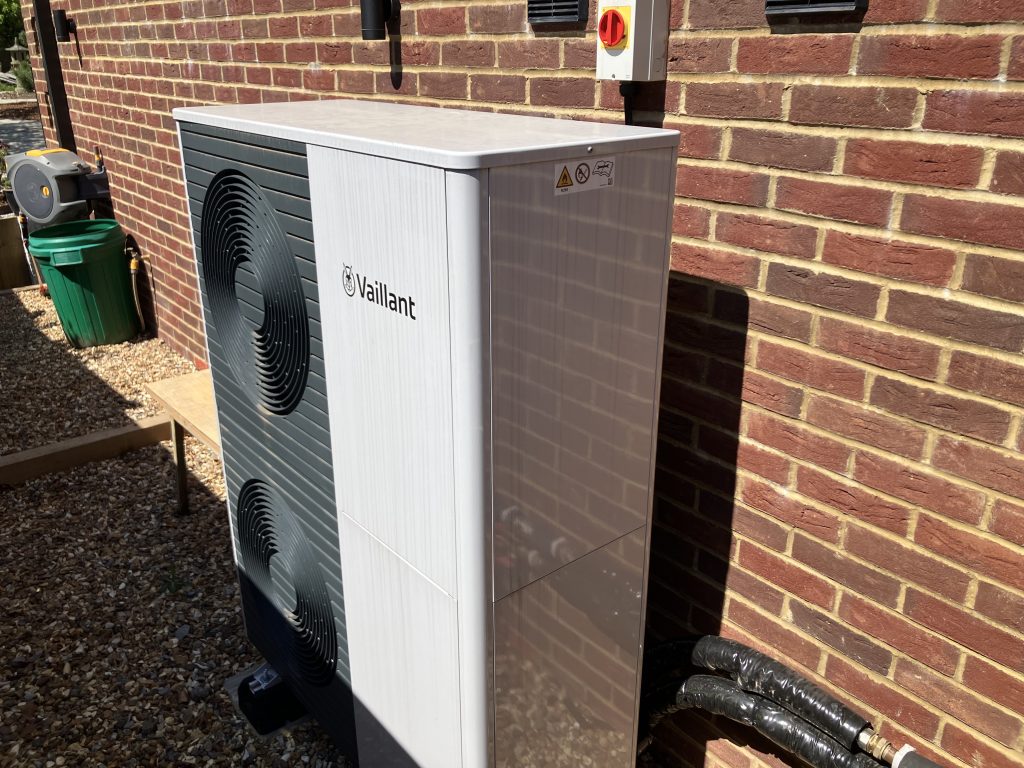
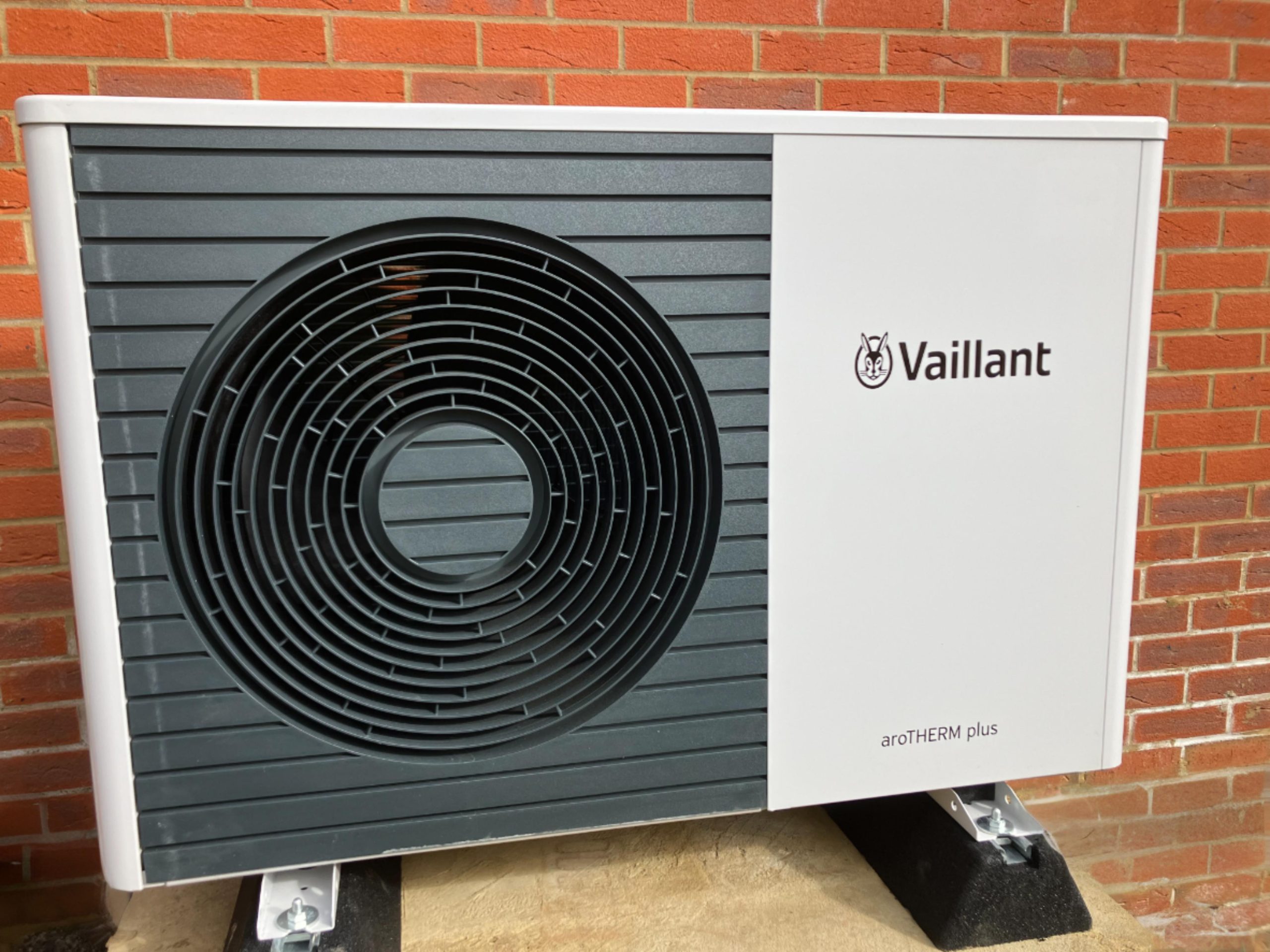
Example of an Air to Water Heat Pump.
12kW system in Amersham, Buckinghamshire. By GSE.

Ground-Source Heat Pumps (GSHP)

Also known as geothermal heat pumps, these systems use the stable temperature of the ground to transfer heat efficiently. They require underground loops filled with a water-antifreeze solution, allowing consistent operation regardless of outdoor conditions. GSHPs are highly efficient but can be costly due to the complexity of the ground loop system.

There are two types of ground loops in GSHPs. Vertical loop systems suit properties with limited land, as loops are drilled deep into the ground. Horizontal loop systems require more space, as loops are laid in shallow trenches, making them cost-effective for rural areas.

GSHPs outperform air-source heat pumps. Their Coefficient of Performance (COP) ranges from 3.0 to 5.0, benefiting from stable underground temperatures. Their efficiency ensures excellent cooling performance. Beyond heating and cooling, GSHPs lower carbon emissions and reduce fossil fuel reliance, making them a sustainable investment.

Example of a ground source horizontal loop system.
20kW system in Wotton Underwood, Buckinghamshire. By GSE.

Water-Source Heat Pumps (WSHP)

These systems use a nearby water source, such as a pond, lake, or well, to exchange heat efficiently. By leveraging stable water temperatures, they provide consistent performance year-round. Water-source heat pumps are highly effective, but their feasibility depends on availability, depth, and water quality, as well as environmental regulations.

There are two main configurations. Closed loop systems submerge pipes in the water source, forming a sealed circuit filled with antifreeze to facilitate heat transfer. This setup minimizes water usage and suits locations with reliable access to water bodies. Open loop systems draw water directly from the source, circulate it through the heat pump, and return it to the environment. These systems offer high efficiency but require careful management.

The efficiency of water-source heat pumps is comparable to ground-source systems. Their Coefficient of Performance (COP) ranges from 3.0 to 5.0, reflecting their ability to generate multiple units of heat per unit of electricity consumed. These systems maintain effective cooling standards and contribute to sustainability by reducing fossil fuel dependence and lowering carbon emissions, making them a valuable solution.

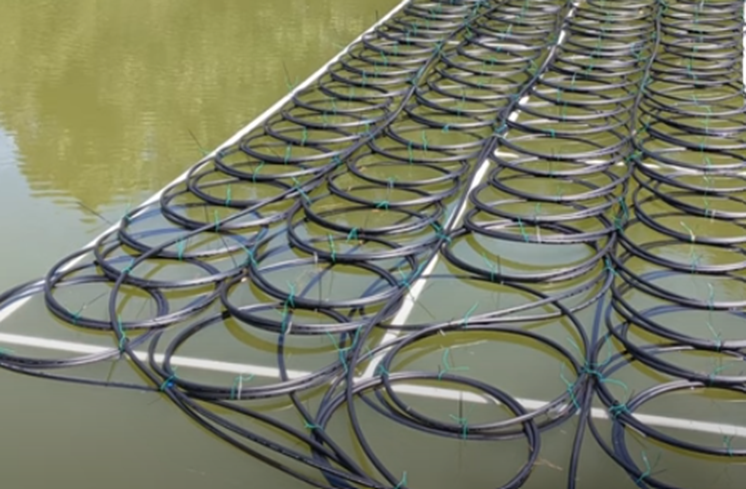
Example of a closed loop system.

Interested in heat pumps?

For more information or a quote, please get in touch.