Choosing an MCS-certified installer guarantees a high-quality renewable energy system. MCS certification signifies adherence to stringent performance and safety standards, verifying both equipment quality and installer competence. This rigorous vetting process ensures installers demonstrate proven compliance with MCS standards, providing assurance in their technical expertise and the reliability of your installation.
RESIDENTIAL HEAT PUMPS
The comfortable, cost effective way to heat you home
Why Choose a Heat Pump

Save Money on Heating
Heat pumps move renewable heat from the air, ground or water using far less electricity than a boiler uses fuel. Their high efficiency means substantially lower running costs compared to oil, LPG, or old gas systems

Upto *£9,000 Government Grant Available
Homeowners in England and Wales can claim upto £9,000 towards an air‑source, ground‑source, or water‑source heat pump through the Boiler Upgrade Scheme — when installed by an MCS‑certified installer like us. *Oil only area, elsewhere £7,500.

Cosy All Year — Heating and Cooling
Heat pumps heat and cool your home, keeping you comfortable in winter and summer.
They provide warmth in cold months and reverse in warm weather to maintain balanced indoor temperatures year‑round.

Works Beautifully With Solar Panels
If you already have Solar PV — or plan to — your heat pump can run even cheaper and cleaner. (We install those too.)
Which Heat Pump Is Right for You?
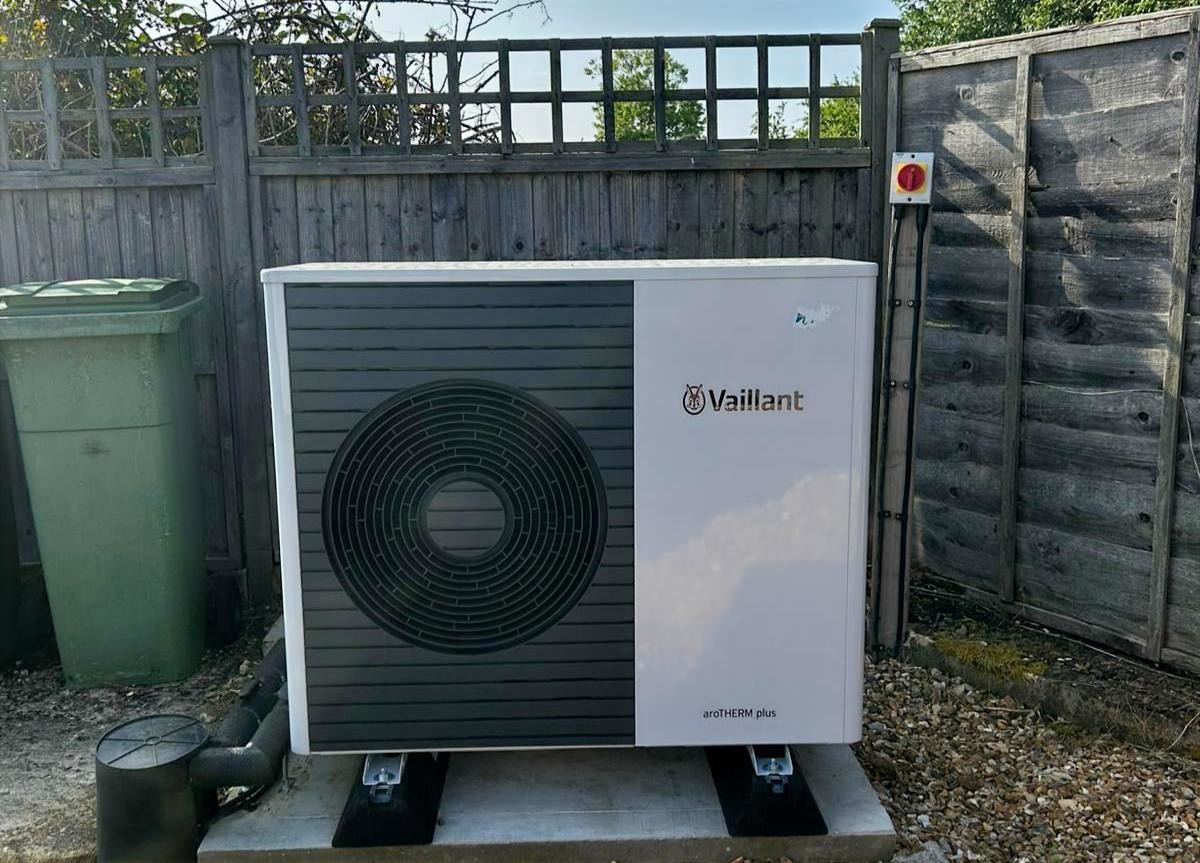
Air Source Heat Pumps (ASHP)
- The UK’s most popular heat pump option – Proven, widely used, and well suited to our climate.
- Ideal for most homes – A great fit for the majority of houses and bungalows.
- Perfect boiler replacement – Ideal for replacing oil, LPG, or older gas boilers.
- Efficient all year round – Provides reliable heating and hot water in every season.

Ground Source Heat Pumps (GSHP )and Water Source Heat Pumps (WSHP)
- Ultra‑efficient, low‑cost heating – Uses stable ground or water temperatures for exceptional efficiency and the lowest running costs.
- Ideal where you have space – Perfect for homes with gardens, land, or access to water.
- Outstanding long‑term performance – Delivers the highest efficiency of any heat‑pump system year after year.
- Expert, certified installation – Installed by accredited specialists in both ground and water source systems.
What is a heat pump and how does it work?
A heat pump is a highly efficient heating system that takes natural heat from the environment—either the air, the ground, or a nearby water source—and upgrades it to heat your home and hot water. Instead of burning fuel, heat pumps move renewable heat, making them a cleaner, more efficient alternative to traditional boilers.
What’s the difference between air source, ground source, and water source heat pumps?
Air‑source heat pumps extract heat from the outside air and are the most commonly installed type.
Ground‑source heat pumps draw heat from underground pipes, delivering very stable performance year‑round.
Water‑source heat pumps use heat from lakes, rivers, or boreholes and can be extremely efficient where suitable water is available.
The best option depends on your property, space, and local conditions and budget.
Will a heat pump keep my home warm all year round?
Yes. All types of heat pumps are designed to provide reliable heating even in cold weather. They deliver steady, comfortable warmth rather than sharp bursts of heat, which many homeowners find improves comfort throughout their home.
Are heat pumps expensive to install?
Installation costs vary depending on the type of system and your property. Air‑source systems are typically the most affordable, while ground‑ and water‑source systems involve more groundwork but offer excellent long‑term efficiency. Government incentives can significantly reduce upfront costs, making all types more affordable than many people expect.
How much can I save on energy bills?
A properly designed heat pump system can reduce heating costs significantly, especially when replacing older gas, oil, or LPG systems. Ground‑ and water‑source heat pumps often offer the highest efficiency, but all heat pumps provide protection against rising fossil‑fuel prices.
Do I need to upgrade my radiators or insulation?
Not always. Many homes can use existing radiators, though some upgrades may improve performance. Insulation helps any heat pump operate more efficiently, but a home survey will clearly explain what’s required and what isn’t, so you only invest where it counts.
Are heat pumps noisy or disruptive?
No. Modern heat pumps are quiet and discreet. Outdoor units operate at low noise levels, and ground‑ and water‑source systems are even quieter as most components are hidden underground or indoors.
How reliable are heat pumps compared to boilers?
Heat pumps are extremely reliable and contain fewer moving parts than traditional boilers. With minimal annual maintenance, most systems last 20–25 years, offering long‑term peace of mind and lower lifetime costs.
Are heat pumps better for the environment?
Yes. All heat pump types produce far lower carbon emissions than gas or oil heating, particularly when powered by renewable electricity. Choosing a heat pump is one of the most effective ways to reduce your home’s environmental impact.
How do I know which type of heat pump is right for my home?
We will help guide you with a no‑obligation home assessment. This will determine which heat pump options are suitable, what grants apply, expected running costs, and potential savings—so you can choose with confidence.
Heat Pumps Designed for Comfortable, Efficient Homes
Choosing us means working with a trusted partner who understands how to design heat pump systems that work properly in real homes. We take a careful, data‑led, home‑specific approach—looking at insulation levels, heat demand, existing emitters, and how your household actually uses heat—to ensure your system delivers comfortable, efficient, and reliable heating all year round.
From your first conversation and detailed system design through installation, commissioning, and ongoing support, we manage the entire process with clarity and care. Our focus is on quiet, low‑running‑cost heat pumps that improve comfort, reduce reliance on fossil fuels, and protect your home from rising energy prices.
Homeowners trust us for honest advice, sound engineering, and systems that are designed properly from day one—so you get dependable performance, not compromises.
Contact us today to discuss your home and find out whether a heat pump is the right solution for comfortable, efficient, future ready heating.