Choosing an MCS-certified installer guarantees a high-quality renewable energy system. MCS certification signifies adherence to stringent performance and safety standards, verifying both equipment quality and installer competence. This rigorous vetting process ensures installers demonstrate proven compliance with MCS standards, providing assurance in their technical expertise and the reliability of your installation.
Commercial Heat Pumps
High performance heating and cooling for commercial buildings
Why Commercial Organisations Are Switching To Heat Pumps

Lower Operating Costs and Greater Energy Price Control
Commercial heat pumps deliver high efficiencies, typically producing three to five units of heat per unit of electricity. This enables organisations to reduce heating costs while limiting exposure to volatile gas and oil prices and improving long‑term energy budget certainty.

A Practical Route to Decarbonisation and Compliance
As regulations tighten, heat pumps provide a proven way to decarbonise commercial heating while supporting net‑zero targets, ESG commitments, and future building standards—without the risk of investing in systems likely to become non‑compliant or obsolete.

Reliable, Scalable Performance for Commercial Buildings
Modern commercial heat pump systems use modular or cascaded designs to deliver reliable, resilient heating across varied building demands, making them well suited to offices, apartments, retail, and mixed‑use developments that need flexibility over time.
Choosing the Right Heat Pump: Air Source and Ground/Water Source Systems Explained
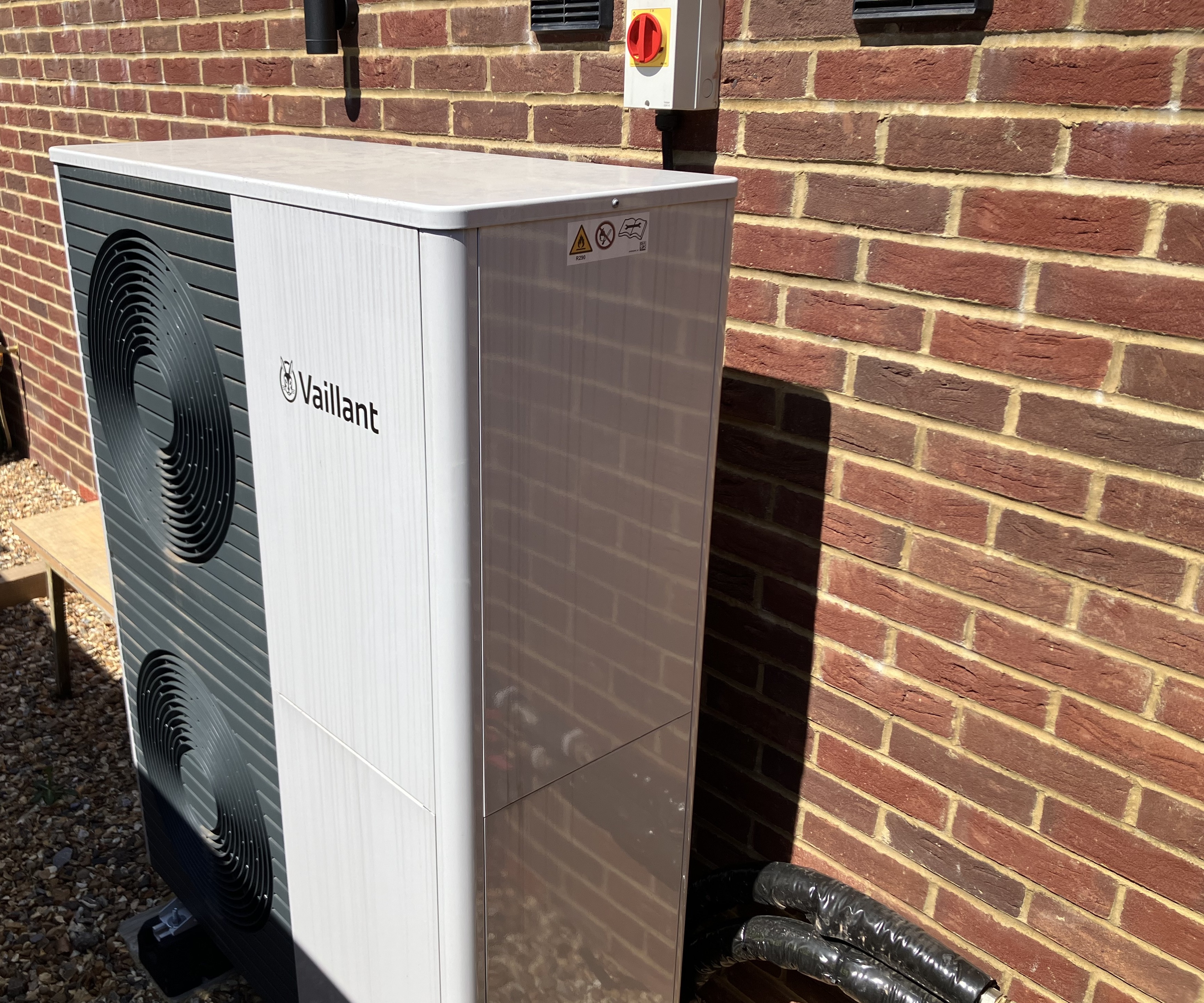
Air Source Heat Pumps (ASHP)
- Extract heat from outside air and upgrade it to provide space heating and hot water for commercial buildings
- Widely used due to faster installation, lower upfront costs, and minimal ground or water requirements
- Well suited to modular and cascaded designs, allowing capacity to match commercial load profiles
- Require consideration of external space, noise limits, visual impact, and planning constraints
- Performance varies with outdoor temperature, making accurate load modelling and system design essential

Ground Source Heat Pump(GSHP) and Water Source Heat Pump(WSHP)
- Extract heat from stable water sources such as rivers, lakes, aquifers, or closed‑loop ground systems
- Deliver higher and more consistent efficiencies due to stable year‑round source temperatures
- Typically involve greater upfront cost and complexity, including drilling, civil works, and permissions
- Feasibility depends heavily on site conditions, environmental approvals, and long‑term access to water
- Best suited to larger or long‑term developments where efficiency gains justify higher capital investment
Frequently Asked Questions(FAQ's)
Are heat pumps suitable for commercial buildings?
Yes. Commercial heat pumps are widely used in offices, apartment blocks, retail, education, healthcare, and mixed‑use buildings. Modular and cascaded designs allow systems to be sized accurately for both small and large loads.
How efficient are commercial heat pumps compared to gas boilers?
Heat pumps typically deliver 3–5 units of heat for every unit of electricity used, making them significantly more efficient than gas boilers, which are limited by combustion efficiency.
Will a heat pump work in cold weather?
Modern commercial heat pumps are designed to operate reliably in low outdoor temperatures. Correct design, sizing, and emitter selection are key to maintaining performance during peak winter conditions.
Can heat pumps provide hot water as well as heating?
Yes. Commercial heat pump systems can provide space heating and hot water, often using buffer vessels or thermal storage to meet higher temperature or peak demand requirements.
How much space is required for a commercial heat pump system?
Space requirements depend on system type and capacity. Air‑source systems need outdoor space for units and airflow, while water‑source systems require plant space and potentially boreholes or water access.
Are heat pumps noisy?
Commercial heat pumps are designed to meet strict noise standards, but noise levels must be considered during design—especially in urban locations. Acoustic assessments and mitigation can be used where required.
How long do commercial heat pumps last?
With correct design, installation, and maintenance, commercial heat pumps typically have a design life of 20–25 years, comparable to traditional commercial heating plant.
Do heat pumps require a lot of maintenance?
Maintenance requirements are generally similar to or lower than traditional boiler systems. Regular servicing helps maintain efficiency, reliability, and warranty compliance.
Can heat pumps work with existing radiators or heating systems?
In many cases, yes. However, existing systems may need upgrades—such as larger radiators, underfloor heating, or improved controls—to operate efficiently at lower flow temperatures.
Are heat pumps a future proof investment for commercial buildings?
Heat pumps align with decarbonisation goals, tightening regulations, and long‑term energy strategies. As fossil‑fuel heating is phased out, heat pumps are considered a future‑ready solution for commercial buildings.
Why Engineering Expertise Matters in Commercial Energy Projects
Choosing the right partner is as important as choosing the right technology. Green Systems Engineering brings clarity, confidence, and robust engineering to commercial heat pump projects, ensuring systems are designed to perform in the real world—not just meet specifications on paper. We take a site‑specific, data‑driven approach, carefully assessing building demand, operational requirements, and future risks to deliver solutions that reduce energy costs, improve resilience, and support long‑term decarbonisation goals. From feasibility through design, installation, and ongoing support, our focus is on engineering discipline, transparency, and measurable outcomes that protect your investment and strengthen your building’s energy strategy.
Contact Green Systems Engineering today to discuss your site and discover how a properly engineered commercial heat pump system can reduce operating costs, future proof your building, and deliver confidence for years to come.