Choosing an MCS-certified installer guarantees a high-quality renewable energy system. MCS certification signifies adherence to stringent performance and safety standards, verifying both equipment quality and installer competence. This rigorous vetting process ensures installers demonstrate proven compliance with MCS standards, providing assurance in their technical expertise and the reliability of your installation.
Heat Pumps for Developers
Power your home with solar panels and cut energy bills
Increase Property Appeal and Returns with Heat Pumps

Stronger Asset Value
Heat pumps deliver lower whole‑life costs and stronger market appeal through reduced maintenance and predictable energy costs. For developers, this means better yields, stronger sustainability marketing, and less resistance from buyers and tenants.

Policy Proof Heating
Gas heating is clearly moving toward restriction and obsolescence, and heat pumps remove the risk of assets becoming non‑compliant mid‑lifecycle. For developers, this protects asset value, avoids retrofit costs, and aligns strongly with lender, investor, and ESG expectations.

Easier Compliance
Heat pumps simplify Part L, SAP and planning compliance, delivering low‑carbon performance by default without over‑engineering or extra technologies. For developers, this means fewer redesigns, smoother approvals, and far less risk of late‑stage compliance surprises.
Choosing the Right Heat Pump for Your Development
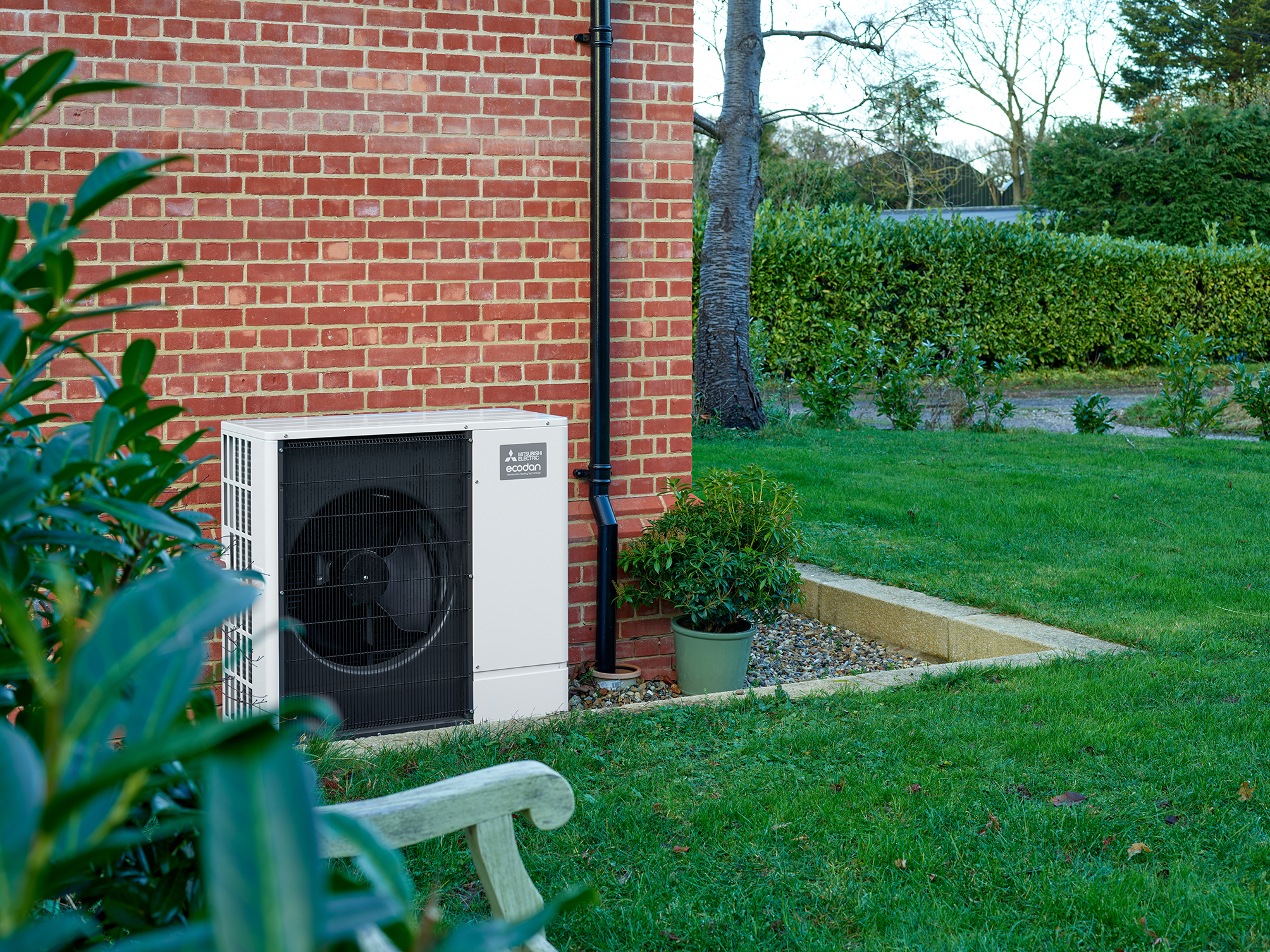
Air Source Heat Pumps (ASHP) – Key Developer Benefits
- Lower upfront cost than water‑source, improving scheme viability and cashflow
- Faster, simpler installation, supporting tighter build programmes
- Minimal ground or water requirements, making them viable on almost any site
- Strong compliance performance versus gas without complex enabling works
- Well understood by planners, contractors, and buyers, reducing delivery and sales risk
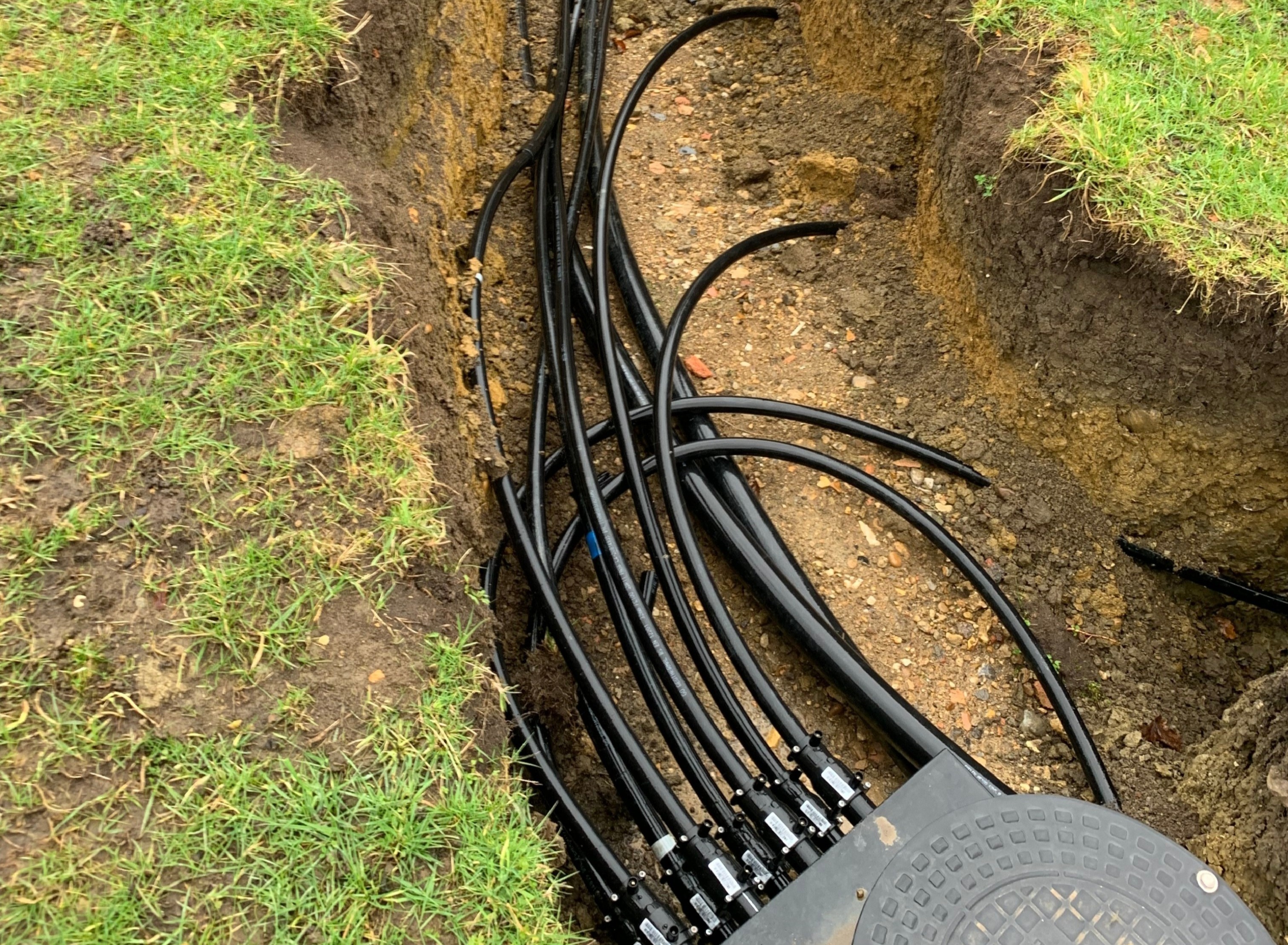
Ground Source Heat Pumps (GSHP) – Key Developer Benefits
- Highest efficiency and lowest carbon output, making Part L, SAP and planning compliance easier on large or high‑density schemes
- Exceptional long‑term running costs, driving stronger whole‑life economics and asset value
- Ideal for large developments (BTR, mixed‑use, campuses) where scale amplifies performance and ROI
- Future‑proof, low‑risk solution aligned with institutional investor and ESG expectations
- Centralised plant with long service life, reducing replacement risk and lifecycle disruption
Frequently Asked Questions (FAQ's)
Are heat pumps compliant with Part L and SAP?
Yes. Heat pumps deliver lower regulated CO₂ emissions than gas and are one of the most reliable ways to meet Part L and SAP targets without over‑engineering the building fabric or adding secondary technologies.
Will heat pumps help with planning approval?
Are heat pumps more expensive to install than gas?
Upfront costs are typically higher, but this is often offset by simpler compliance, reduced ancillary systems, and stronger whole‑life economics, particularly on larger schemes.
How do heat pumps compare on whole life cost?
Heat pumps generally offer lower maintenance costs and more predictable energy pricing, improving whole‑life cost performance and long‑term asset value compared to combustion systems.
Will heat pumps still be compliant in the future?
Yes. Heat pumps are considered future‑proof, avoiding exposure to gas bans, connection restrictions, and premature retrofit requirements as policy tightens.
Do heat pumps work at scale for larger developments?
Absolutely. Both air‑source and water‑source systems scale well, with water‑source particularly suited to high‑density, BTR, mixed‑use, and campus‑style developments.
IHow do heat pumps affect sales and lettings?
They support strong sustainability messaging, lower running costs, and compliance with ESG expectations, making homes more attractive to buyers, tenants, and institutional investors.
Are heat pumps noisy or visually intrusive?
Modern systems are significantly quieter than early models, and with good design they can meet planning noise limits and be well integrated architecturally.
Do heat pumps require specialist maintenance?
They require less maintenance than gas systems and no combustion‑related safety checks, reducing operational complexity for managing agents and landlords.
How do I choose between air source and water source heat pumps?
The decision depends on site constraints, scale, capital strategy, and long‑term objectives. Air‑source suits most sites with lower capex and faster delivery, while water‑source offers the highest efficiency and long‑term value where conditions allow.
High-Performance Heat Pump Solutions for Modern Developments
For property developers, heat pumps are no longer a future option—they are a critical decision affecting planning approval, compliance risk, programme certainty, and long-term asset value. Green Systems Engineering exists to remove that risk. We work from early feasibility through to commissioning, ensuring systems are designed around construction programmes, planning constraints, and commercial objectives—not generic specifications. Our approach focuses on getting it right first time, avoiding late-stage redesigns and compliance surprises that derail budgets and timelines. Unlike installers who treat heat pumps as a product, we treat them as core infrastructure. Each system is engineered to meet Part L, SAP, and local authority requirements while balancing capital cost, efficiency, acoustics, and long-term performance. The result is a solution that satisfies planners, reassures funders, and performs in use, while providing the certainty and accountability developers need through clear technical leadership, realistic programmes, and lifecycle value aligned with investor and ESG expectations.